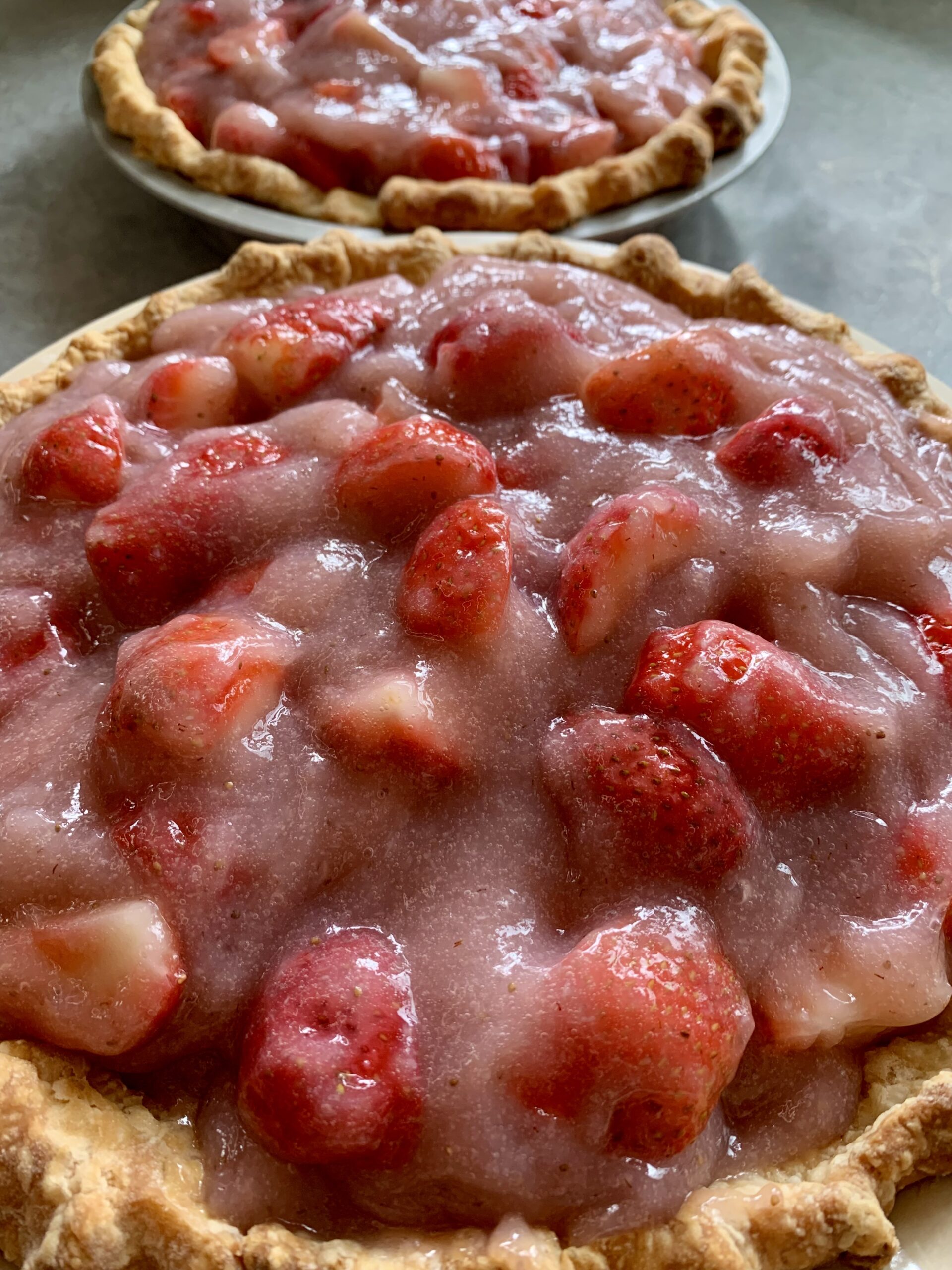
This is my go-to pie crust. It uses up sourdough discard, freezes beautifully, and works just as well for savory pies as it does for sweet ones. It can be blind baked, par-baked, or used as both a bottom and top crust—truly a staple in my kitchen.

When I get a little overzealous feeding my sourdough starter and end up with extra discard, I’ll make a batch (or two!) of this crust. I divide it into rounds, wrap them well, and freeze them. That way, when we’re craving pie—sweet or savory—I already have a crust ready to thaw overnight in the refrigerator, roll out, and bake.
This crust is perfectly tangy and wonderfully flaky. It holds its structure beautifully whether you’re using it as a base or a full double crust. The one non-negotiable? Pie weights (or dried beans!). Trust me… skipping that step leads to shrinking and misshapen crusts—I learned that the hard way.
So grab your pie plates (ceramic or tin both work!), I prefer my ceramic pie plate, but it does take longer to bake than my other thinner tin one, but both work beautifully, So, put on your Apron First and let’s get started.
Why You’ll Love This
- Uses up extra sourdough discard
- Flaky, tender, and slightly tangy
- Works for both sweet and savory pies
- Freezer-friendly for easy prep
- Can be blind baked or fully baked
Ingredients
All-Purpose Flour (210g / 1½ cups) – Provides structure for a tender but sturdy crust
Salt (5g / 1 tsp) – Enhances flavor and balances sweetness
Sugar (11g / 1 tbsp) – Adds a subtle sweetness and helps with browning
Cold Butter (226g / 1 cup) – Creates those flaky layers; must be very cold
Sourdough Discard (200–250g / about 1 cup) – Adds tangy flavor and moisture; hydration level may vary
Ice-Cold Water (1–3 tbsp) – Helps bring the dough together without warming the butter

{All ingredients listed below with exact amounts needed.}
Equipment
- 2 (9-inch) pie plates, Ceramic or Tin (Ceramic takes a little longer to bake but turns out beautifully too! I have both of these, and use them equally.
- Food processor (recommended) or pastry cutter/fork
- Rolling Pin– I love this one but even a long cylinder will do.
Full Bake Direction:

Step 1:Mix Dry Ingredients
Add flour, salt, and sugar to a food processor. Pulse a few times to combine.

Step 2: Cut in Butter
Add cold, cubed butter and pulse until pea-sized pieces form.

Step 3: Add Sourdough Discard
Pulse in sourdough discard until a shaggy dough forms. Add 1–3 tablespoons ice-cold water if needed.

Step 4: Form Dough
Turn dough onto a floured surface. Divide into 2 discs (about 1-inch thick), wrap, and refrigerate for at least 30 minutes (or up to 3 days). **Note: If you do choose to cold ferment for 24-72 hours, allow discs to sit at room temperature for 10-15 minutes before rolling out.**
*At this point you can freeze the wrapped dough rounds in an air tight container for up to 3 months. Before using, defrost in refrigerator overnight, then allow discs to sit out at room temperature for 15 minutes before rolling.*

Step 5: Roll Out
Prepare 2 buttered pie plates.
Roll each disc into a 12-inch circle on a floured surface.

Step 6:Transfer to Pie Plate
Place dough into greased pie plates, trim edges, and crimp as desired.
Chill Again
Chill prepared crust for 15–30 minutes before baking or filling.
Use as Desired
Fill and bake according to your recipe, or follow blind baking instructions below.
Blind Baking Instructions: (Par-baking so no soggy bottom)

Blind Baking Steps:
- Follow the directions above for placing each rolled circle into their pie plates. Trim & Crimp edges. Cover and Chill prepared crust for 30 minutes while preheating oven to 400°F.
- Line the crust with crumpled parchment paper.
- Fill with pie weights or dried beans (don’t skip!).
- Bake:
- Tin pan: 15 minutes
- Ceramic pan: 20 minutes
- At this point choose your next direction adventure with either proceed to “Fully Baked Crusts” or “Partial Baked Crusts” below.
For Fully Baked Crust:
- Reduce heat to 375°F
- Remove weights, prick bottom with fork
- Bake 10–15 more minutes until golden. Done and Cool.
- Cool completely before adding no-bake fillings.
*This step is for No-Bake pies, such as a strawberry cream pie, allow the crust to completely cool before adding the fillings.
See next section for Partially Baked Crust: (pies that are going back in the oven, such as quiches or pumpkin pie)

For Partially Baked Crust:
(For Pies that are going back in the oven, such as quiches or pumpkin pie)
- Reduce heat to 375°F
- Remove weights, prick bottom
- Bake 7 more minutes
- Add the contents of the pie recipe (such as pumpkin pie filling or quiche filling) then bake according to those instructions. If you find the crimped edges getting too dark, cover the edges in strips of aluminum foil around the circumference until the center of the pie is fully baked. Enjoy!
Table Conversation Starter:
If you could bake any pie right now, what would it be?
Sweet pie or savory pie—what wins?
If you had a bakery, what would you name it?
Tips and Tricks
- Keep everything cold – Cold butter = flaky layers
- Don’t overmix – You want visible butter pieces
- Use ice water – Helps control dough consistency
- Chill before baking – Prevents shrinking
- Always use pie weights – Keeps shape intact
- Make ahead & freeze – Dough keeps beautifully for future use
- Let dough rest before rolling (if long chilled) – 10–15 minutes at room temp helps prevent cracking
You might also like these:
- Quiche (like my Salmon & Leek Quiche 👀)
- Chicken Pot Pie
- Strawberry Cream Pie
- Pumpkin Pie
- Fruit Galettes
Tangy Sourdough Pie Crust
Ingredients
Method
- Pulse flour, salt, and sugar in food processor.
- Add cold butter; pulse until pea-sized pieces form.
- Add sourdough discard; pulse until shaggy dough forms. Add water if needed.
- Divide into 2 discs, wrap, and chill 30 minutes.
- Roll out and place into pie plates.
- Chill again before baking or filling.
- Follow blind baking instructions above if needed.
Notes
Tips & Tricks
- Keep everything cold – Cold butter = flaky layers
- Don’t overmix – You want visible butter pieces
- Use ice water – Helps control dough consistency
- Chill before baking – Prevents shrinking
- Always use pie weights – Keeps shape intact
- Make ahead & freeze – Dough keeps beautifully for future use
- Let dough rest before rolling (if long chilled) – 10–15 minutes at room temp helps prevent cracking
Table Conversation Starters 🍽️
- If you could bake any pie right now, what would it be?
- Sweet pie or savory pie—what wins?
Frequently Asked Questions
Troubleshooting Pie Crust
Even a simple pie crust can feel tricky at times—but don’t worry, most issues are easy to fix once you know what to look for!
Crust is tough instead of flaky
-Mix just until combined and keep visible butter pieces -Likely overmixed or too much water was added
Crust shrinks while baking
-Stretching the dough when placing it in the pan (let it fall naturally instead)
-Dough wasn’t chilled long enough
-Skipped pie weights during blind baking
Butter leaking during baking
-Chill the crust again before putting it in the oven
-Butter got too warm before baking
Edges browning too quickly
-Cover edges loosely with foil or a pie shield while the center finishes baking
Crust is soggy on the bottom
-Assembling ahead of time (especially for quiche) can cause this—keep filling and crust separate until ready to bake
-Filling was added too early or too wet
-Crust wasn’t par-baked when it should have been
Crust cracks when rolling out
-Not enough moisture in the dough
-Dough is too cold—let it sit at room temperature for 10–15 minutes
Crust sticks to the counter
-Try rotating the dough frequently as you roll can.
-Not enough flour on your surface or rolling pin

Have additional inquiries?
We are here to help. Let’s engage in a conversation.